

Blog
Diabetic Foot Ulcers and Poor Circulation: How SoftWave Supports Healing
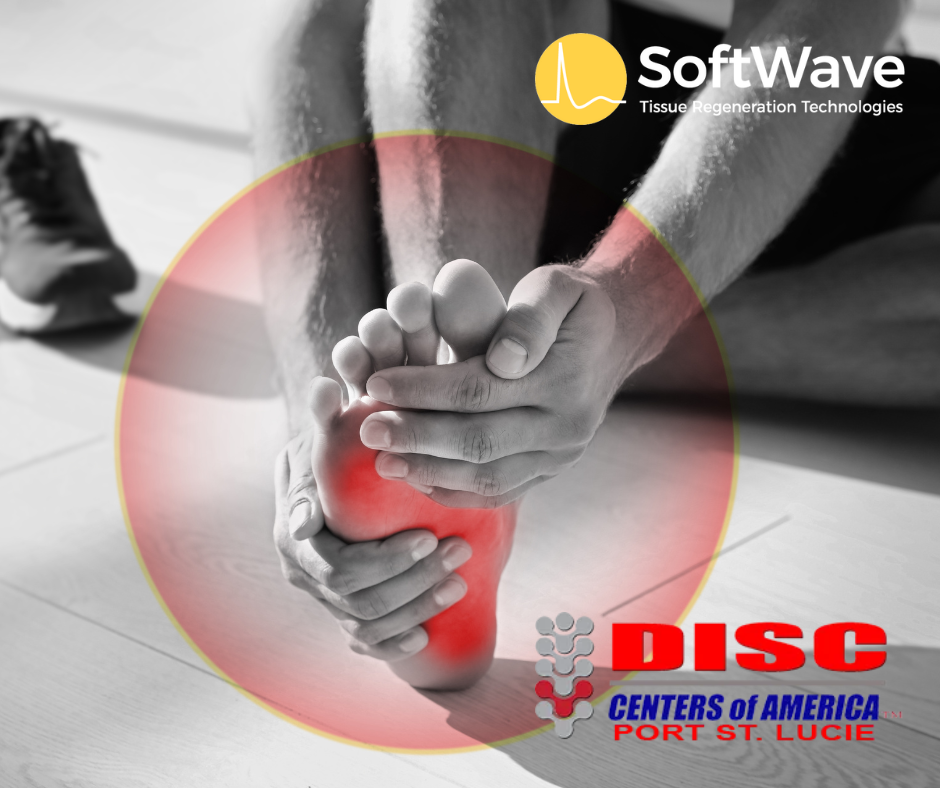
Why Diabetic Foot Ulcers Are So Hard to Heal in Port St. Lucie
If you or someone you love is living with diabetes here in Port St. Lucie, you already know that a small sore on the foot is never a small thing. A blister, a cut, or a callus that would heal in days for most people can turn into an open wound that lingers for weeks or months. These slow-to-heal wounds, called diabetic foot ulcers, are one of the most serious complications of diabetes, and they are closely tied to two problems that often travel together: poor circulation and nerve damage. When blood flow is limited and sensation is dulled, the body simply cannot repair tissue the way it should.
At Disc Center of America Port St. Lucie, Dr. John Grassam offers SoftWave Tissue Regeneration Technology (TRT) as a non-invasive option that is designed to support blood flow and tissue healing. It is important to be clear from the start: SoftWave is meant to work alongside your medical wound care, not in place of it. If you have a diabetic foot ulcer, your physician, podiatrist, or diabetic wound care team should remain the center of your care. SoftWave is a supportive therapy that may complement that plan.
How Poor Circulation and Neuropathy Slow Healing
Healing is an active process. Your body needs a steady supply of oxygen-rich blood, immune cells, and growth signals delivered to the site of an injury. In diabetes, several things can get in the way of that delivery, and understanding them helps explain why these ulcers behave the way they do.
Poor Circulation
Over time, high blood sugar can damage and narrow blood vessels, especially the small vessels far from the heart. The feet sit at the very end of that circulatory line, so they often feel the effects first. When circulation to the foot is reduced, the wound receives less oxygen, fewer healing nutrients, and fewer of the cells needed to close it. A wound that is starved of blood flow can stall, meaning it stops making progress and stays open.
Diabetic Neuropathy
Elevated blood sugar can also damage nerves, a condition called diabetic neuropathy. When the nerves in the feet are affected, sensation fades. That may sound harmless, but it is actually dangerous. A person may not feel a pebble in a shoe, a hot surface, or a growing blister. The injury goes unnoticed, pressure keeps building on the same spot, and by the time it is discovered the wound is already established. Reduced sensation also means less of the protective response that normally makes us shift our weight off a sore area.
Why the Two Together Are So Difficult
When poor circulation and neuropathy occur at the same time, wounds start easily and heal slowly. Add in the higher infection risk that comes with diabetes, and you can see why these ulcers demand careful, consistent attention. This is why a coordinated medical team matters, and why any supportive therapy should fit into that larger plan.
Where SoftWave TRT Fits In
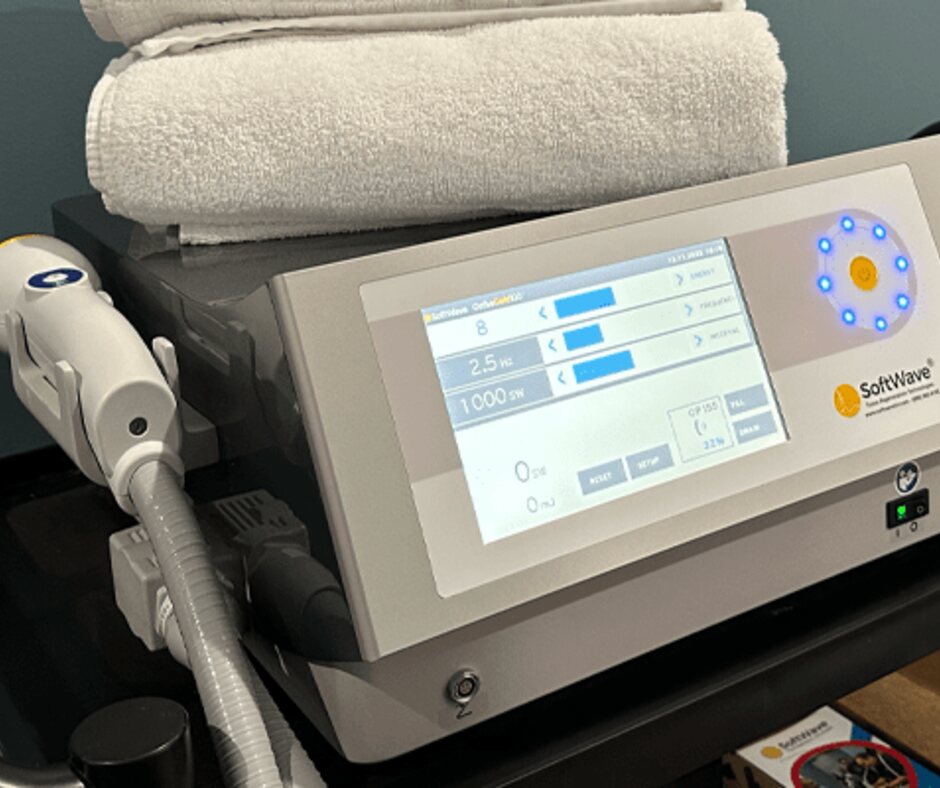
SoftWave TRT uses electrohydraulic, spark-generated broad-focused acoustic waves delivered through a patented parabolic reflector. Unlike radial, electromagnetic, or piezoelectric devices, SoftWave is the only broad-focused shockwave technology, and its waves are designed to penetrate deep into tissue to help trigger the body's own healing cascade. It is non-invasive, with no needles, no drugs, no surgery, and no downtime.
SoftWave is notable in the wound care conversation because of its FDA clearances. Among its cleared uses, SoftWave is cleared for the treatment of chronic diabetic foot ulcers and for temporarily increasing blood flow. It is also cleared for the activation of connective tissue, the temporary relief of minor muscle and joint pain, and the treatment of acute second-degree burns. For someone dealing with a stubborn diabetic wound and reduced circulation, the blood flow and chronic diabetic foot ulcer clearances are the most relevant, and they are a meaningful part of why Dr. Grassam offers this technology in Port St. Lucie.
How SoftWave Is Designed to Support Healing
In plain language, here is how the therapy is intended to work with your body:
- Temporarily increasing blood flow: The acoustic waves are designed to encourage circulation in the treated area, helping deliver more oxygen and nutrients to tissue that has been starved of them.
- Supporting new blood vessel growth (angiogenesis): SoftWave is associated with signaling such as VEGF and eNOS that is involved in forming new blood vessels, which matters greatly when the existing vessels are compromised.
- Activating the body's repair cells: The therapy is designed to stimulate resident stem cell activation and migration, calling the body's own healing cells toward the area that needs them.
- Encouraging tissue building: Signals such as PCNA and BMP are involved in cell proliferation and collagen production, the raw materials of new, healthy tissue.
- Modulating inflammation: SoftWave is designed to help regulate the inflammatory environment, including toll-like receptor activity, so healing can move forward.
None of this replaces the fundamentals of diabetic wound care, such as offloading pressure, controlling blood sugar, keeping the wound clean, and managing infection. Instead, SoftWave is intended to support the biological environment your body needs to heal, working in concert with the care your physician or podiatrist provides.
If you are managing a diabetic foot ulcer and want to understand whether SoftWave could complement your current wound care plan, the next step is a conversation. Reach out to Disc Center of America Port St. Lucie to schedule a consultation and bring your questions with you.
What to Expect With SoftWave Sessions
SoftWave sessions are quick and comfortable. Each treatment typically takes about 10 to 15 minutes, with no downtime afterward, so you can return to your day. Care is usually delivered as a series over roughly six to eight weeks, and the body's healing response commonly continues for weeks or even months after the last session.
Because every diabetic wound is different, Dr. Grassam will want to understand your full picture, including your medical history, your current wound care, and who is on your diabetic care team. Coordination is key. SoftWave is at its best when it is one part of a well-managed plan that also includes your primary physician, your podiatrist, and any wound care specialists you already see.
An Honest Word About Expectations
Diabetic foot ulcers are serious, and no responsible provider should promise a cure or a guaranteed outcome. What SoftWave offers is a non-invasive, FDA-cleared therapy designed to support blood flow and tissue healing. Many patients appreciate having a drug-free option that fits alongside their existing care. The goal is to support your body and keep you working closely with the professionals who manage your diabetes.
A Local Option That Works With Your Care Team
For Port St. Lucie residents whose foot ulcer just will not heal, poor circulation and neuropathy create real obstacles, but they do not have to be faced alone. By adding a supportive therapy that is designed to encourage circulation and tissue repair, and by keeping your physician and podiatrist fully involved, you give your body a stronger foundation to heal on. Dr. Grassam sees SoftWave not as a replacement for medical wound care but as a partner to it.
Ready to Take the Next Step?
If a diabetic foot ulcer or poor circulation is holding you back, ask how SoftWave TRT might support your healing alongside the care of your physician and podiatrist. Reach out today to talk with Dr. Grassam about whether this therapy fits your situation.
Request your SoftWave Therapy new patient visit online today
Contact Disc Center of America Port St. Lucie
Disc Center of America Port St. Lucie
555 NW Lake Whitney Place, Ste. 105
Port St. Lucie, FL 34986
Phone: (772) 237-2080
Our Main Office Website: https://portstluciedisccenter.com/
‹ Back
Recent Posts
-
-
-
-
How SoftWave Therapy and Chiropractic Care Work Together
June 11, 2026
-

 555 NW Lake Whitney Place Ste. 105