

Blog
SoftWave vs. PRP and Stem Cell Injections: Comparing Your Regenerative Options
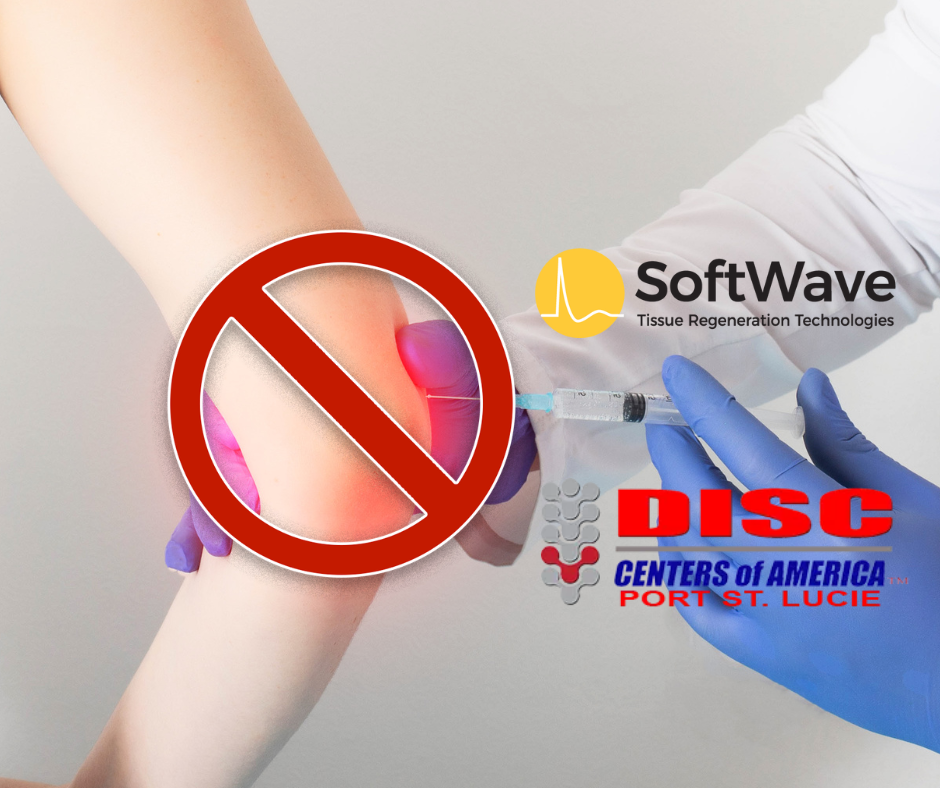
Weighing Your Regenerative Options in Port St. Lucie
If you have been researching ways to recover from a stubborn injury or chronic joint pain without surgery, you have probably run into terms like PRP, stem cell injections, and SoftWave therapy. All three fall under the umbrella of regenerative medicine, and all three share the same goal: helping your body heal rather than simply masking symptoms. Yet they work in very different ways, and the differences matter when you are deciding what fits your body, your comfort level, and your schedule here in Port St. Lucie.
At Disc Center of America Port St. Lucie, Dr. John Grassam helps patients understand these choices so they can make an informed decision. This article compares SoftWave Tissue Regeneration Technology with PRP and stem cell injections so you can see how each approach works, what the experience is like, and why many people appreciate a needle-free option.
A Quick Look at PRP and Stem Cell Injections
PRP, or platelet-rich plasma, and stem cell injections are both injection-based therapies. They are designed to deliver concentrated healing components directly into an injured area. Understanding how they are prepared helps clarify how they differ from SoftWave.
How PRP Works
PRP begins with a blood draw. A provider spins your blood in a centrifuge to separate and concentrate the platelets, which are rich in growth factors. That concentrated plasma is then injected into the target tissue, such as a knee, shoulder, or tendon. The idea is that the growth factors may help stimulate repair in the area where they are placed.
How Stem Cell Injections Work
Stem cell therapies typically involve harvesting cells, often from your own bone marrow or fat tissue, or using cells from another source. That harvesting step can require a separate procedure. The prepared cells are then injected into the injured region with the goal of supporting tissue repair. Because these approaches involve collecting and processing living cells, they tend to be more involved and more expensive.
Both PRP and stem cell injections can be valuable tools, and many patients have pursued them. The point here is not to criticize them but to explain how they differ from a broad-focused shockwave approach.
How SoftWave Takes a Different Path
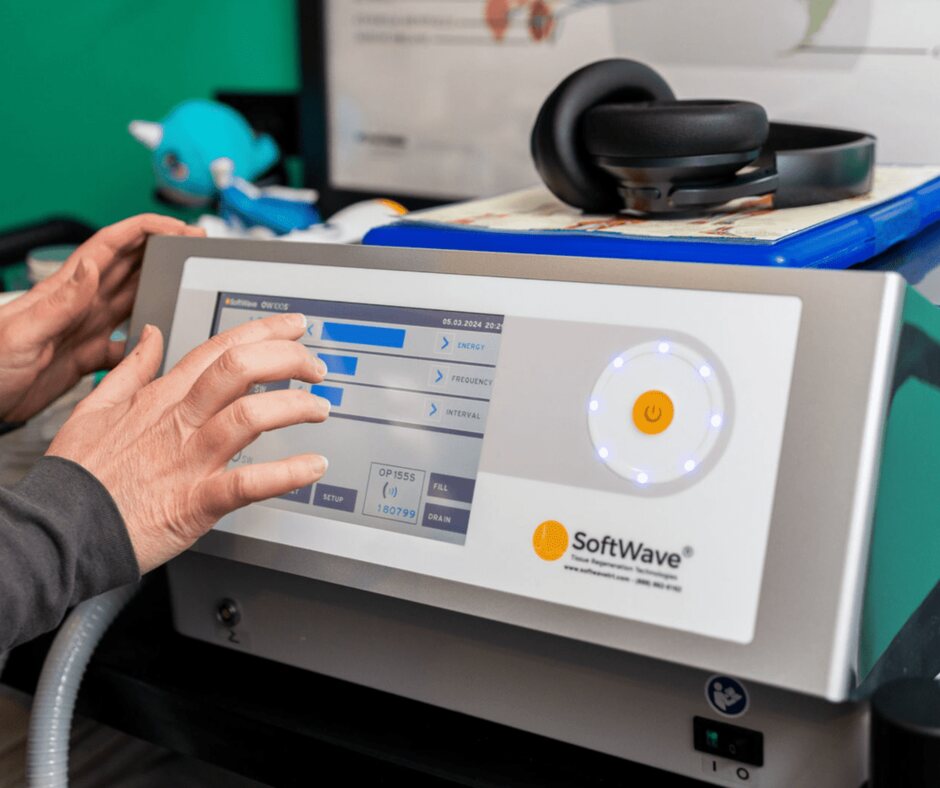
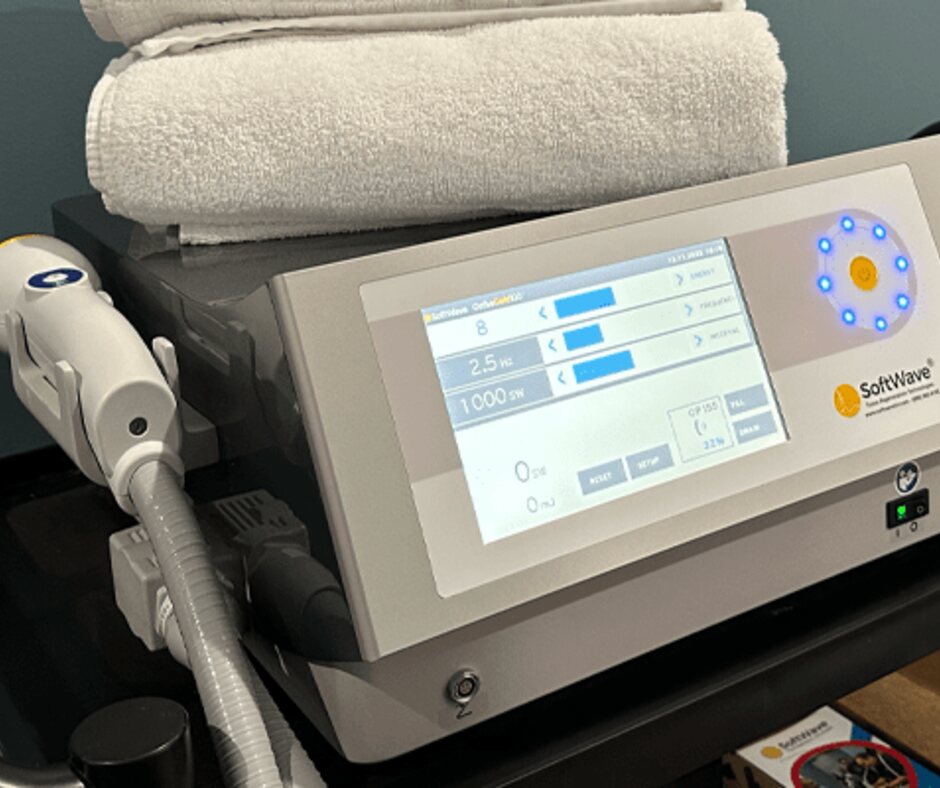
SoftWave TRT does not involve any injection, harvesting, or medication. Instead, it uses electrohydraulic, spark-generated acoustic waves that are broad-focused through a patented parabolic reflector. This makes SoftWave the only broad-focused shockwave technology, distinct from radial, electromagnetic, and piezoelectric devices. Those acoustic waves penetrate deep into tissue to trigger your body's own healing cascade.
Here is the key distinction. PRP and stem cell injections deliver healing material from the outside in. SoftWave is designed to activate the resident stem cells already present in your body and to signal your tissues to begin repairing themselves. In other words, rather than adding cells or plasma through a needle, SoftWave aims to wake up and mobilize the healing resources you already have.
How SoftWave Helps Your Body Repair
The science behind SoftWave is easier to appreciate in plain language. The therapy is designed to:
- Activate and mobilize resident stem cells so they migrate toward areas that need repair.
- Encourage angiogenesis, the formation of new blood vessels, through signaling molecules such as VEGF and eNOS.
- Support cell proliferation and collagen production by way of markers like PCNA and BMP.
- Modulate inflammation so the healing environment can improve.
- Regulate toll-like receptors and help clear senescent cells, the worn-out cells that can slow recovery.
These mechanisms work together to create conditions in which your tissue can repair itself over time. Healing is not instant. It often continues for weeks and even months after your last session as your body carries the process forward.
Comparing the Experience
For many people in Port St. Lucie, the day-to-day experience of a therapy is just as important as the science. Here is how SoftWave compares on the practical points patients ask about most.
Needles and Comfort
PRP and stem cell injections both involve needles, and stem cell therapy may involve a harvesting procedure as well. SoftWave is completely needle-free. There is no blood draw and no injection. Many patients describe the sessions as comfortable and easy to tolerate.
Drugs and Downtime
SoftWave uses no drugs and requires no recovery downtime. You can typically return to your normal day right after a session. Injection-based therapies may come with post-procedure soreness or activity restrictions, which vary by provider and by the area treated.
Time and Convenience
SoftWave sessions are short, often around ten to fifteen minutes, and are usually delivered as a series over roughly six to eight weeks. That predictable schedule makes it straightforward to fit treatment into a busy life without taking time off to recover.
If you are trying to decide which regenerative approach makes sense for your situation, the most helpful next step is a conversation with a provider who can evaluate your specific condition. Schedule a consultation with Disc Center of America Port St. Lucie to talk through your options and find out whether SoftWave is a good fit for you.
Can SoftWave Be Used Alongside Other Care?
One of the advantages of a non-invasive therapy is that it can often complement other treatments rather than compete with them. Because SoftWave does not rely on medication or injections, it may fit within a broader care plan that includes chiropractic care, physical therapy, and healthy movement. Dr. Grassam can help you understand how SoftWave might work together with the rest of your recovery strategy.
It is worth noting what SoftWave is cleared to do. The FDA has cleared SoftWave for the activation of connective tissue, a temporary increase in blood flow, temporary relief of minor muscle and joint pain, treatment of chronic diabetic foot ulcers, and treatment of acute second-degree burns. As with any therapy, results vary from person to person, and no honest provider can guarantee a cure. What SoftWave offers is a research-supported, needle-free way to encourage your body's natural healing response.
Which Option Is Right for You?
There is no single answer that fits everyone. PRP and stem cell injections have their place, and some patients choose them for specific reasons. Many people, however, are drawn to SoftWave because it avoids needles, drugs, and downtime while still targeting the body's own regenerative capacity. SoftWave has been studied at leading institutions and is used by clinicians who work with professional and collegiate athletes, which speaks to the confidence practitioners place in the technology.
The best way to choose is to get an honest evaluation of your condition and goals. That way you can compare your options with real information rather than guesswork.
Ready to Take the Next Step?
If you want a regenerative option that skips the needles and lets you get back to your day, SoftWave therapy may be worth exploring. Reach out to Disc Center of America Port St. Lucie to see whether it fits your recovery goals.
Request your SoftWave Therapy new patient visit online today
Contact Disc Center of America Port St. Lucie
Disc Center of America Port St. Lucie
555 NW Lake Whitney Place, Ste. 105
Port St. Lucie, FL 34986
Phone: (772) 237-2080
Our Main Office Website: https://portstluciedisccenter.com/
‹ Back
Recent Posts
-

-
-
-

How SoftWave Therapy and Chiropractic Care Work Together
June 11, 2026
-

 555 NW Lake Whitney Place Ste. 105