

Blog
How Many SoftWave Sessions Will You Need and When Will You See Results?
How Long Does SoftWave Therapy Take to Work? Setting Expectations in Port St. Lucie
One of the first questions people ask when they hear about SoftWave TRT is simple and fair: how many sessions will I need, and when will I actually feel better? If you live in Port St. Lucie and you are tired of nagging pain that limits your walks along the Riverwalk, your rounds of golf, or your time chasing grandkids, you want a realistic picture before you commit. The honest answer is that healing follows a process, not a light switch. Most people work through a short series of sessions over several weeks, and the body keeps responding for weeks to months afterward.
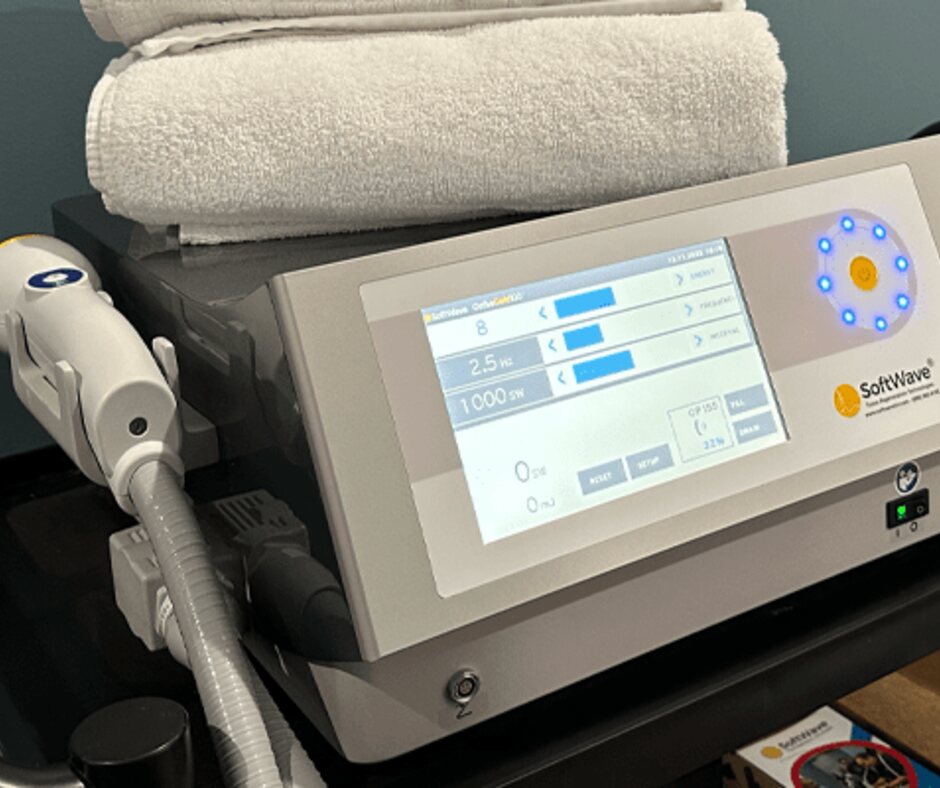
At Disc Center of America Port St. Lucie, Dr. John Grassam uses SoftWave TRT to help patients pursue lasting relief without needles, drugs, surgery, or downtime. SoftWave is a regenerative approach designed to trigger your own healing response, so the timeline reflects biology rather than a quick mask over symptoms. Understanding that process up front helps you commit with confidence and recognize progress as it happens.
Why One Session Is Rarely Enough
It is tempting to hope that a single visit will erase a problem that took months or years to develop. Chronic pain and stubborn soft tissue issues usually build up slowly through wear, injury, inflammation, and reduced blood flow. Reversing that pattern asks the body to do real repair work, and repair happens in stages.
SoftWave TRT delivers broad-focused acoustic waves that reach deep into tissue and act as a signal, prompting cells to begin a healing cascade. Each session is designed to reinforce and build on the last. Think of it the way you would think about physical conditioning: one workout does not transform your fitness, but a consistent series creates change you can feel and keep. A course of SoftWave works on a similar principle, with each visit nudging the process forward.
What a Typical Course Looks Like
While every plan is individualized, many patients follow a series of sessions spread over roughly six to eight weeks. The sessions themselves are short, often in the range of ten to fifteen minutes, which makes them easy to fit into a lunch break or a stop on the way home. There are no needles and no medications, so you can typically return to your normal day right afterward.
During this window, your provider tracks how you respond and adjusts as needed. Some conditions call for a tighter or longer schedule, and some people notice shifts sooner than others. The goal is not to hit an arbitrary number of visits but to give your tissue enough repeated stimulation to move healing along.
When Will You Start to Notice a Difference?
Results vary from person to person, and that is not a hedge, it is the reality of how bodies heal. Several factors influence your timeline:
- How long you have had the issue. A recent flare may respond differently than pain you have carried for years.
- The area and type of tissue involved. Different structures respond at different rates.
- Your overall health. Circulation, activity level, sleep, and other conditions all play a role.
- Consistency. Completing the recommended series gives the process its best chance to build momentum.
Some people report changes early in their course, while others notice steadier improvement as the sessions accumulate. Rather than watching for one dramatic moment, it helps to look for small signs of progress: a little more range of motion, an easier morning, a task that used to hurt feeling more manageable.
Healing Continues After Your Last Session
Here is a point that surprises many patients, and it is one of the most encouraging parts of the process. Because SoftWave is designed to activate your body's own repair mechanisms, the response does not stop the day your series ends. Cellular activity set in motion during treatment can continue working for weeks and even months afterward. In other words, your last appointment is often not the finish line for your results but a handoff to your body to keep the progress going.
How SoftWave Helps Your Body Do the Work
SoftWave TRT uses electrohydraulic, spark-generated broad-focused acoustic waves delivered through a patented parabolic reflector. It is the only broad-focused shockwave technology, distinct from radial, electromagnetic, and piezoelectric devices, and its design allows the energy to spread and penetrate deep into tissue. That deep signal is what sets the healing cascade in motion. In plain language, the therapy is designed to:
- Activate resident stem cells and encourage them to migrate toward areas that need repair.
- Support angiogenesis, the formation of new blood vessels, through signaling molecules such as VEGF and eNOS.
- Promote cell proliferation and collagen activity by way of factors like PCNA and BMP.
- Help modulate inflammation so the environment favors healing.
- Regulate toll-like receptors and support the clearance of aged, senescent cells.
These are the kinds of biological changes that take time to unfold, which is exactly why a series of sessions and a patient timeline make sense. SoftWave is not forcing a temporary result; it is inviting your body to rebuild.
If you are ready to find out what a realistic plan could look like for your specific situation, the next step is a straightforward exam and consultation. Schedule your SoftWave Therapy new patient visit with Disc Center of America Port St. Lucie and get answers tailored to you rather than a one-size-fits-all guess.
Your Plan Is Built for You, Not a Template
No two bodies, histories, or goals are identical, so no honest provider can promise a fixed number of sessions before meeting you. That is why your course begins with an evaluation. Dr. John Grassam reviews your history, examines the area of concern, and considers your goals before recommending a plan. From there, the number and spacing of sessions are shaped around your condition and how you respond along the way.
What to Expect at Each Visit
SoftWave sessions are designed to be comfortable and efficient. You stay fully clothed for most areas, the applicator is moved over the treatment zone, and the whole visit is usually brief. Many patients describe the sensation as a series of pulses. Because the therapy is non-invasive with no downtime, you can generally head straight back to work, errands, or the beach.
Setting Honest Expectations
SoftWave TRT is not a guaranteed cure, and it does not replace guidance from your physician for serious or complex conditions. What it offers is a well-studied, non-invasive option that many patients turn to when they want to address the source of a problem rather than simply cover it. Approaching your care with realistic expectations, a willingness to complete the series, and patience for the after-treatment healing window gives you the best footing for a good outcome.
The takeaway is reassuring: relief is a process you can plan for. A short series of quick sessions over several weeks, followed by continued healing in the weeks and months after, is a timeline most Port St. Lucie patients can build into a busy life.
Ready to Take the Next Step?
If you are wondering how many sessions your condition might take and when you could start feeling better, the clearest answer comes from a personal exam and an individualized plan. Reach out today and take the first step toward relief you can actually schedule around.
Request your SoftWave Therapy new patient visit online today
Contact Disc Center of America Port St. Lucie
Disc Center of America Port St. Lucie
555 NW Lake Whitney Place, Ste. 105
Port St. Lucie, FL 34986
Phone: (772) 237-2080
Our Main Office Website: https://portstluciedisccenter.com/
‹ Back
Recent Posts
-

-
-
-
How SoftWave Therapy and Chiropractic Care Work Together
June 11, 2026
-

 555 NW Lake Whitney Place Ste. 105