

Blog
Frozen Shoulder Relief Without Surgery: A SoftWave Approach in Port St. Lucie
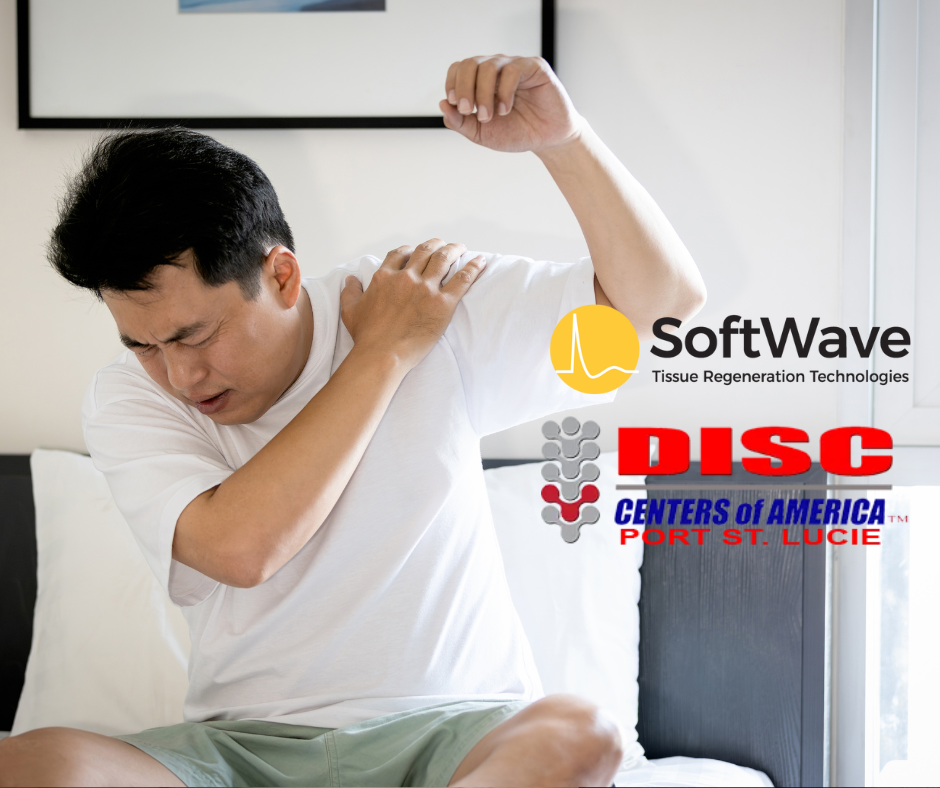
Why Does My Shoulder Feel Stuck? Understanding Frozen Shoulder in Port St. Lucie
If reaching for a seatbelt, fastening a bra, or lifting a coffee mug has slowly become painful and stiff, you may be dealing with a condition called frozen shoulder. It can feel like your arm is trapped in an invisible cast that no one else can see. For many people in Port St. Lucie, this stiffness creeps in gradually, then lingers for months, making everyday tasks frustrating and sleep difficult. The good news is that surgery is not the only option. A non-surgical approach that supports your body's own healing may help you regain comfort and movement over time.
At Disc Center of America Port St. Lucie, Dr. John Grassam works with patients who are searching for drug-free, non-invasive ways to address stubborn shoulder pain. One of the tools used in the clinic is SoftWave TRT, a form of regenerative shockwave therapy designed to encourage the body's natural repair processes. In this article, we will explain what frozen shoulder actually is, walk through its typical stages, and describe how a SoftWave approach aims to support tissue healing and restored range of motion.
What Is Frozen Shoulder (Adhesive Capsulitis)?
Frozen shoulder, known medically as adhesive capsulitis, happens when the connective tissue capsule that surrounds your shoulder joint becomes thickened, inflamed, and tight. Healthy shoulder tissue is flexible and allows a wide range of motion. When adhesive capsulitis develops, the capsule stiffens and bands of scar-like tissue can form, which limits how far the joint can move in every direction.
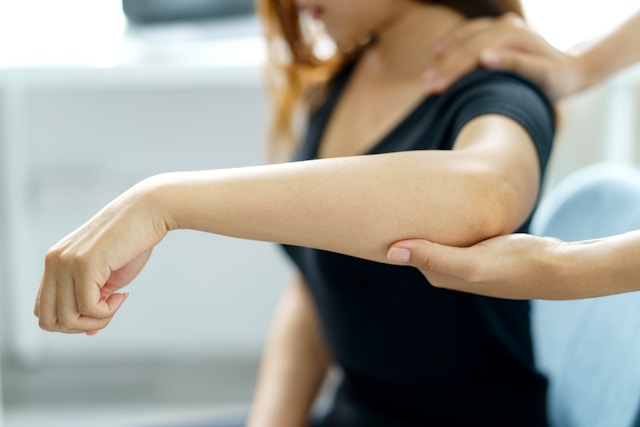
One frustrating feature of frozen shoulder is that the restriction is not just about pain holding you back. Even when someone else tries to move your arm for you, the shoulder simply will not budge past a certain point. This is different from many other shoulder problems, where movement is limited mainly because it hurts.
The exact cause is not always clear. Frozen shoulder often shows up after a period of reduced shoulder use, such as recovery from an injury, surgery, or an illness that kept the arm still. It is also seen more often in adults between roughly 40 and 60 years of age, in women, and in people managing certain health conditions such as diabetes or thyroid issues. Because the causes can vary, a careful evaluation is an important first step.
The Three Stages of Frozen Shoulder
Frozen shoulder usually moves through three overlapping phases. Understanding where you are in this process can help set realistic expectations for recovery.
- Freezing stage: Pain gradually increases, and the shoulder starts to lose motion. This phase can be especially uncomfortable at night. It often lasts several weeks to several months.
- Frozen stage: Pain may actually ease somewhat, but stiffness takes over. Daily activities like dressing, reaching overhead, or grooming become genuinely difficult. This phase can also stretch across many months.
- Thawing stage: Range of motion slowly begins to return. This phase can take anywhere from several months to a year or more, and progress is often gradual.
Because this condition can be slow to resolve on its own, many people look for supportive care that may help calm discomfort and encourage movement during these stages rather than simply waiting it out.
Non-Surgical Options for Frozen Shoulder
Surgery is sometimes discussed for frozen shoulder, but it is generally considered a later option after more conservative approaches have been tried. Many patients understandably prefer to explore non-surgical routes first. These commonly include gentle stretching, guided range-of-motion exercises, activity modification, and therapies aimed at reducing inflammation and supporting healthy tissue.
A non-surgical plan is often built around patience and consistency. Overly aggressive stretching can sometimes irritate the joint, while doing nothing at all may allow stiffness to settle in more deeply. This is where a thoughtful, individualized approach matters, and where a therapy like SoftWave TRT may fit into a broader care plan.
How SoftWave TRT Aims to Help Frozen Shoulder
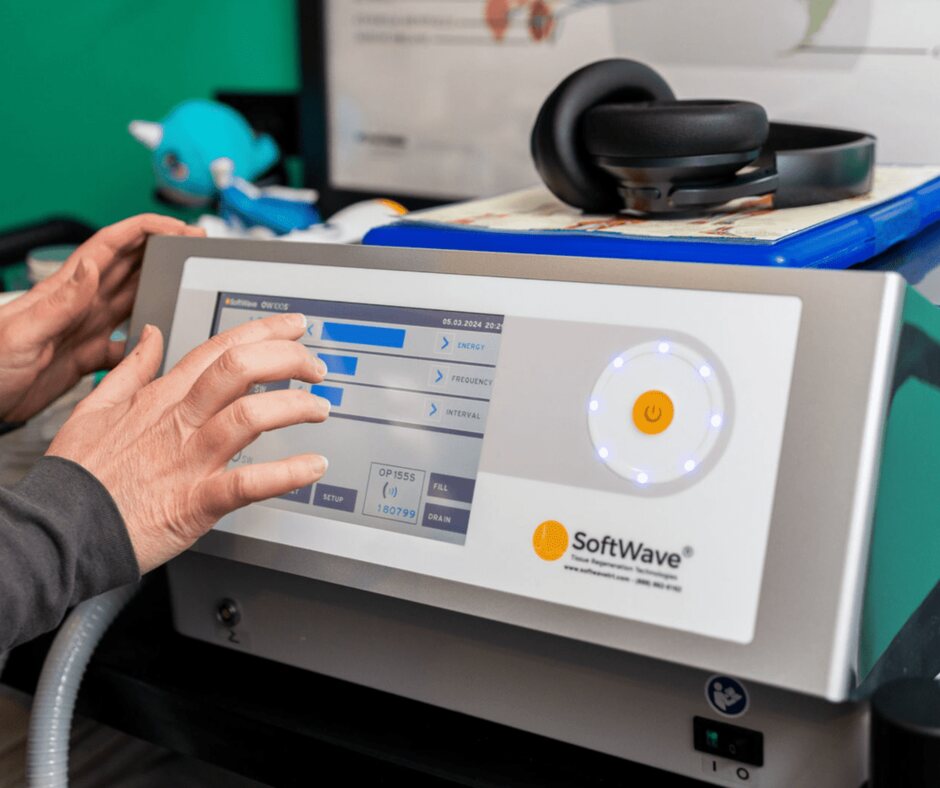
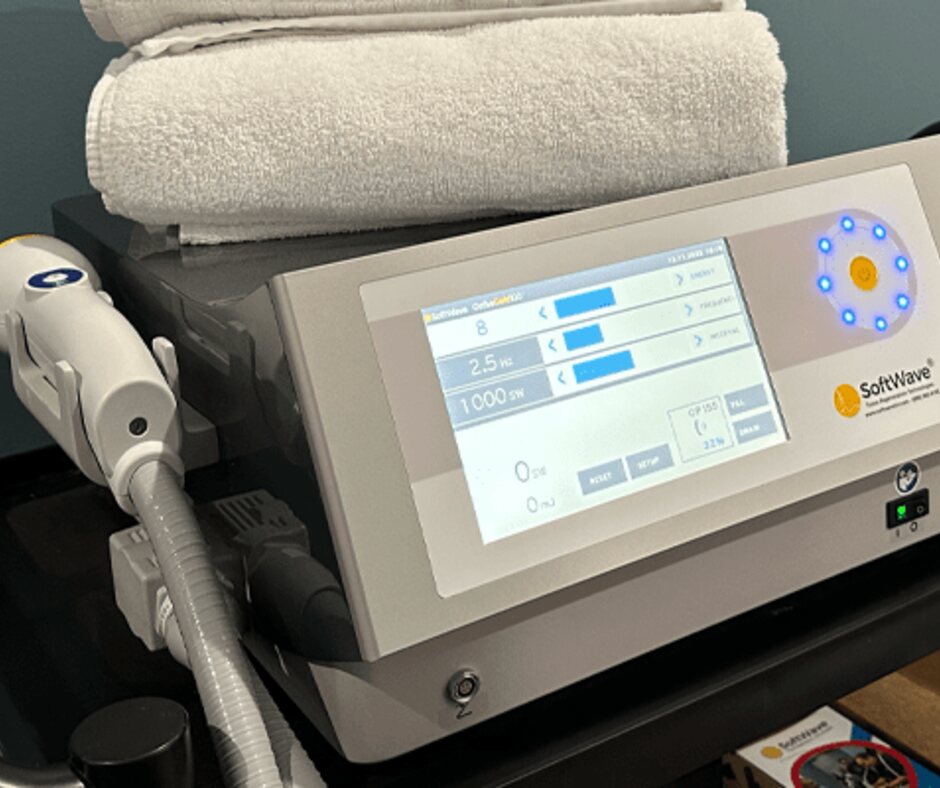
SoftWave TRT uses electrohydraulic, spark-generated acoustic waves delivered through a patented parabolic reflector. This design produces broad-focused shockwaves, which sets it apart from radial, electromagnetic, and piezoelectric devices. The broad-focused energy is able to penetrate deep into tissue, where it is intended to trigger the body's own healing cascade rather than mask symptoms.
Instead of forcing the joint open, the goal is to support the biological environment so that tissue can respond and recover. Here is a plain-language look at the mechanisms researchers associate with this type of therapy:
- Stem cell activation: SoftWave is designed to help activate and recruit the body's own resident stem cells to areas that need repair.
- New blood flow: The waves may promote angiogenesis, the formation of new blood vessels, through signaling molecules such as VEGF and eNOS. Better blood flow can support healing tissue.
- Cell proliferation and collagen: Signals linked to PCNA and BMP are associated with cell growth and healthy collagen, which are important for connective tissue.
- Inflammation modulation: The therapy is thought to help regulate the inflammatory response so healing can move forward.
- Tissue cleanup: It may support clearance of aged, senescent cells and help regulate toll-like receptors involved in the repair process.
For a stiff, irritated shoulder capsule, the appeal of this approach is that it targets the underlying tissue environment. By encouraging blood flow and connective tissue activation, SoftWave is designed to create better conditions for the shoulder to move more freely over time.
What to Expect During SoftWave Sessions
One reason many patients are drawn to SoftWave is the experience itself. Sessions are non-invasive, with no needles, no drugs, no surgery, and no downtime. Each visit is typically brief, often around 10 to 15 minutes, and most people are able to return to their normal day right afterward.
Care is usually delivered as a series of sessions over roughly six to eight weeks. It is also worth noting that the healing response can continue in the weeks and months after your final session as your body keeps responding. Frozen shoulder in particular can be slow to resolve, and results vary from person to person, so a realistic timeline and consistent follow-through matter.
If shoulder stiffness is limiting your work, your workouts, or your sleep, you do not have to simply wait and hope it passes. Schedule a SoftWave evaluation in Port St. Lucie to find out whether this non-surgical approach may be a fit for your shoulder.
A Local, Whole-Person Approach
Frozen shoulder rarely exists in isolation. Compensating for a stiff shoulder can affect your neck, upper back, and posture, which is why a broader musculoskeletal evaluation can be valuable. At Disc Center of America Port St. Lucie, Dr. John Grassam takes time to assess how your shoulder is moving and how the surrounding areas may be contributing to the problem.
It is important to be clear and responsible about expectations. SoftWave TRT is not a guaranteed cure for frozen shoulder, and it is not a replacement for medical advice from your physician. What it offers is a non-invasive, drug-free option designed to support your body's natural healing while you work to restore motion. Many patients appreciate having a conservative path to explore before considering more invasive procedures.
Ready to Take the Next Step?
Frozen shoulder can be slow and frustrating, but you do not have to navigate it alone or jump straight to surgery. A consultation can help you understand your stage and whether a SoftWave approach may support your recovery.
Request your SoftWave Therapy new patient visit online today
Contact Disc Center of America Port St. Lucie
Disc Center of America Port St. Lucie
555 NW Lake Whitney Place, Ste. 105
Port St. Lucie, FL 34986
Phone: (772) 237-2080
Our Main Office Website: https://portstluciedisccenter.com/
‹ Back
Recent Posts
-
-
-
-
How SoftWave Therapy and Chiropractic Care Work Together
June 11, 2026
-

 555 NW Lake Whitney Place Ste. 105