

Blog
Pickleball Injuries in Port St. Lucie: How SoftWave Keeps You on the Court
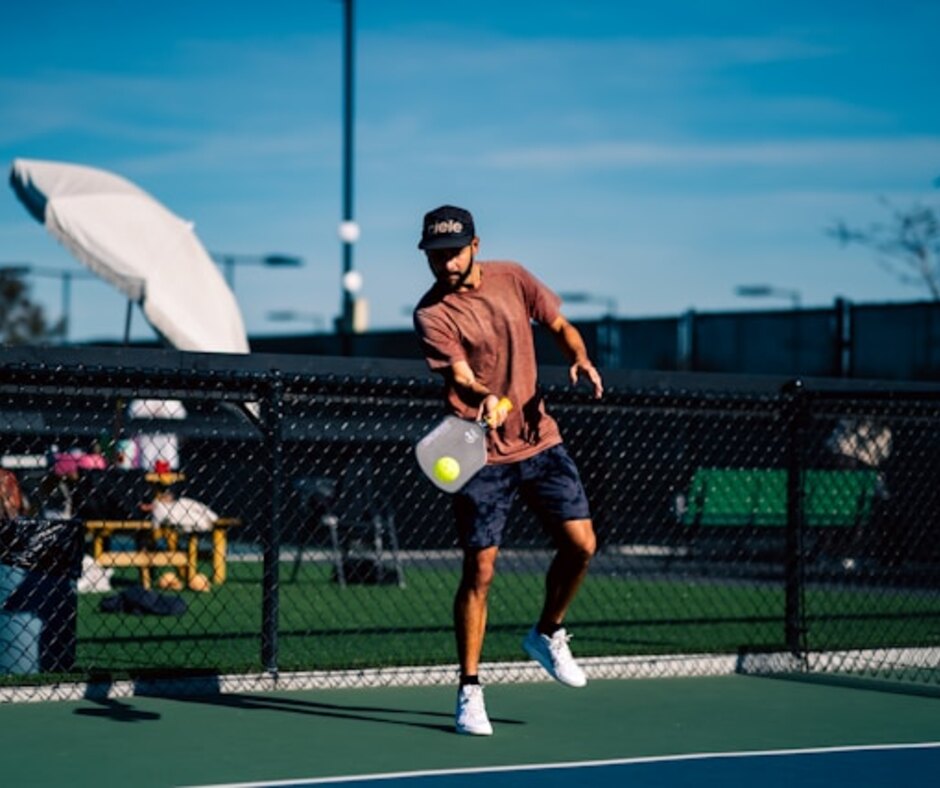
Pickleball Is Booming in Port St. Lucie, and So Are the Injuries
Drive past any park, community center, or gated neighborhood in Port St. Lucie and you will likely hear the unmistakable pop of a pickleball paddle. The sport has exploded across the Treasure Coast, drawing players of every age onto the courts for the fun, the social scene, and the great year-round Florida weather. With all that action, though, comes a rising tide of aches, strains, and nagging injuries that can pull you off the court just when you are hitting your stride.
The good news is that getting sidelined does not have to mean weeks of downtime, pain medication, or surgery. At Disc Center of America Port St. Lucie, Dr. John Grassam helps active players recover using SoftWave TRT, a non-invasive shockwave therapy designed to jump-start the body's own healing process. If you love the game and want to keep playing, understanding your common injuries and how SoftWave may help is the first step toward staying in the lineup.
The Most Common Pickleball Injuries We See
Pickleball may look gentler than tennis, but the quick lateral movements, sudden stops, overhead swings, and repetitive motions add up fast. Here are the injuries that most often send local players looking for relief.
Pickleball Elbow (Lateral Epicondylitis)
Often called tennis elbow, this overuse injury shows up as pain on the outside of the elbow that can radiate down the forearm. Repetitive gripping and swinging irritate the tendons that attach near the elbow. Many players notice it worsens with dinks, drives, and long rallies, and it can linger for months if ignored.
Shoulder Strain and Rotator Cuff Irritation
Overhead serves, smashes, and reaching for high balls place real demand on the shoulder. The rotator cuff and surrounding soft tissue can become inflamed or strained, leaving you with pain when you lift your arm or sleep on that side.
Knee Pain and Strain
All those pivots, lunges, and quick changes of direction load the knees hard. Players frequently deal with tendon irritation, general strain, and flare-ups of existing wear and tear. Hard court surfaces only add to the impact.
Achilles and Calf Issues
The push-off and sprint-forward nature of pickleball puts stress on the Achilles tendon and calf muscles. Tightness, strain, and tendon irritation are common, and the Achilles in particular can become a stubborn problem when it is not addressed early.
Ankle Sprains
A quick shuffle to reach a ball, an awkward landing, or a step on a stray ball can roll an ankle in an instant. Sprains range from mild to significant and can leave the joint swollen, sore, and unstable.
Why These Injuries Hang Around
Tendons and ligaments have limited blood supply compared to muscle, which is one reason they can be slow to bounce back. When you keep playing through pain, or return before the tissue has recovered, small problems can turn into chronic ones. Rest and ice help in the short term, but they do not always address the underlying tissue that needs to heal. That is where a regenerative approach can make a meaningful difference.
How SoftWave Therapy Helps Pickleball Players
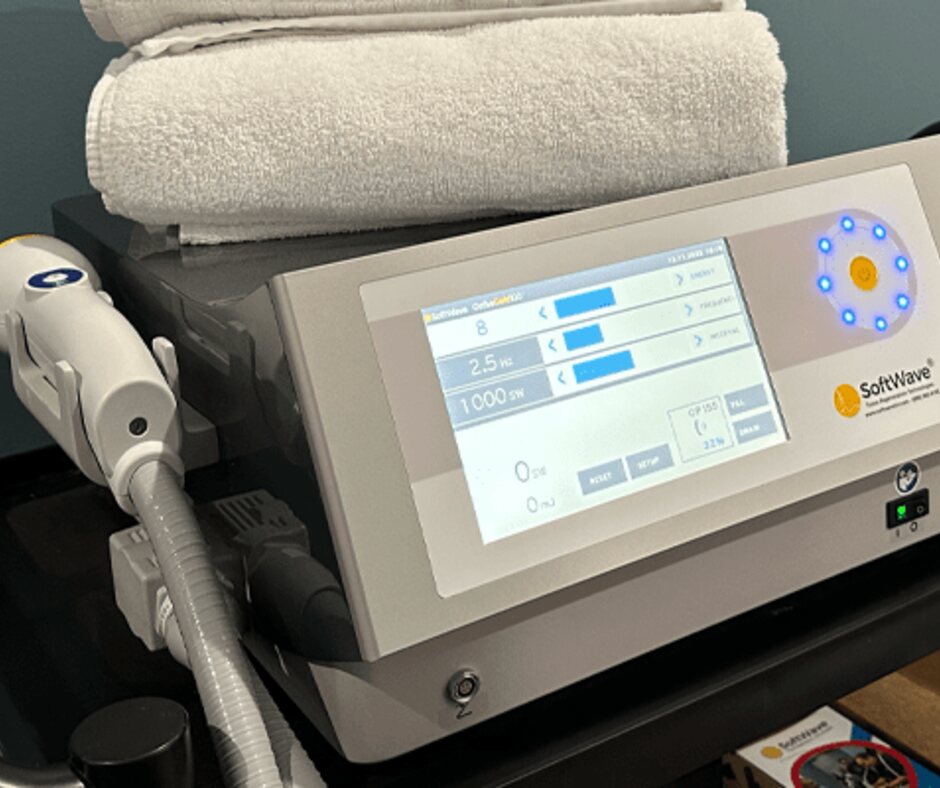
SoftWave TRT is not the radial pressure-wave device you may have seen at a gym. It is an electrohydraulic, spark-generated shockwave that produces broad-focused acoustic waves through a patented parabolic reflector. It is the only broad-focused shockwave technology, and those waves penetrate deep into tissue to help trigger the body's natural healing cascade right where you need it.
In plain language, here is what SoftWave is designed to do inside the injured area:
- Activate resident stem cells and encourage them to migrate to the treated tissue, supporting repair.
- Promote angiogenesis, the formation of new blood vessels, through signals like VEGF and eNOS, which may improve blood flow to areas that normally struggle to heal.
- Stimulate cell proliferation and collagen activity through factors such as PCNA and BMP, which matter for tendon and ligament tissue.
- Modulate inflammation and help regulate toll-like receptors, part of how the body manages the healing environment.
- Support clearance of senescent cells, the worn-out cells that can slow recovery.
Because it works with your own biology rather than masking symptoms, SoftWave is a fitting option for the overuse and soft-tissue injuries that pickleball players know all too well.
What a Session Actually Feels Like
One of the reasons active people appreciate SoftWave is how simple the experience is. It is non-invasive, with no needles, no drugs, no surgery, and no downtime. Sessions typically run about 10 to 15 minutes, and most patients complete a series over roughly 6 to 8 weeks. Because the therapy sparks an ongoing biological response, many patients report that healing continues for weeks and even months after their final session. For a pickleball player, that means you can often continue with daily life during your treatment plan rather than putting everything on hold.
If a nagging elbow, knee, shoulder, Achilles, or ankle is keeping you off the courts in Port St. Lucie, there is no reason to simply wait and hope it fades. Schedule your SoftWave evaluation with Disc Center of America Port St. Lucie and take the first step back toward the game you love.
Getting Back on the Court the Smart Way
Recovering well is about more than a single therapy. Dr. Grassam looks at the whole picture so you can return to play with confidence and lower your risk of a repeat injury. A smart comeback often includes a few key habits.
- Warm up properly before you step on the court, including light movement and dynamic stretching for the shoulders, hips, and calves.
- Ease back in gradually rather than jumping straight into three-hour sessions after time off.
- Pay attention to footwear and choose court shoes with good lateral support rather than running shoes.
- Address pain early instead of playing through it, since small issues are easier to resolve than chronic ones.
- Build strength and mobility in the areas that take the most stress so your body can handle the demands of the game.
SoftWave TRT can be an important part of that plan, helping the injured tissue recover while you rebuild your strength and technique. It is worth noting that SoftWave supports the body's healing and is not a guaranteed cure, and it does not replace an evaluation by your medical provider when one is needed. What it offers many active players is a responsible, drug-free path toward feeling better and moving well again.
A Local Team That Understands Active Living
Port St. Lucie is a community that loves to stay active, and pickleball is right at the heart of that. Dr. John Grassam and the team at Disc Center of America Port St. Lucie work with people who want to keep doing what they enjoy, whether that is competitive play, casual weekend games, or simply staying fit and social on the courts. SoftWave has been studied at leading institutions and is used by clinicians who work with professional and collegiate athletes, and now that same technology is available to players right here in your neighborhood.
Ready to Take the Next Step?
Do not let elbow, knee, shoulder, or ankle pain keep you on the sidelines all season. Find out whether SoftWave TRT is a good fit for your recovery so you can get back to the game you love.
Request your SoftWave Therapy new patient visit online today
Contact Disc Center of America Port St. Lucie
Disc Center of America Port St. Lucie
555 NW Lake Whitney Place, Ste. 105
Port St. Lucie, FL 34986
Phone: (772) 237-2080
Our Main Office Website: https://portstluciedisccenter.com/
‹ Back
Recent Posts
-
-
-
-

How SoftWave Therapy and Chiropractic Care Work Together
June 11, 2026
-

 555 NW Lake Whitney Place Ste. 105