

Blog
SoftWave Therapy vs. At-Home Devices: TENS, Massage Guns, and Red Light
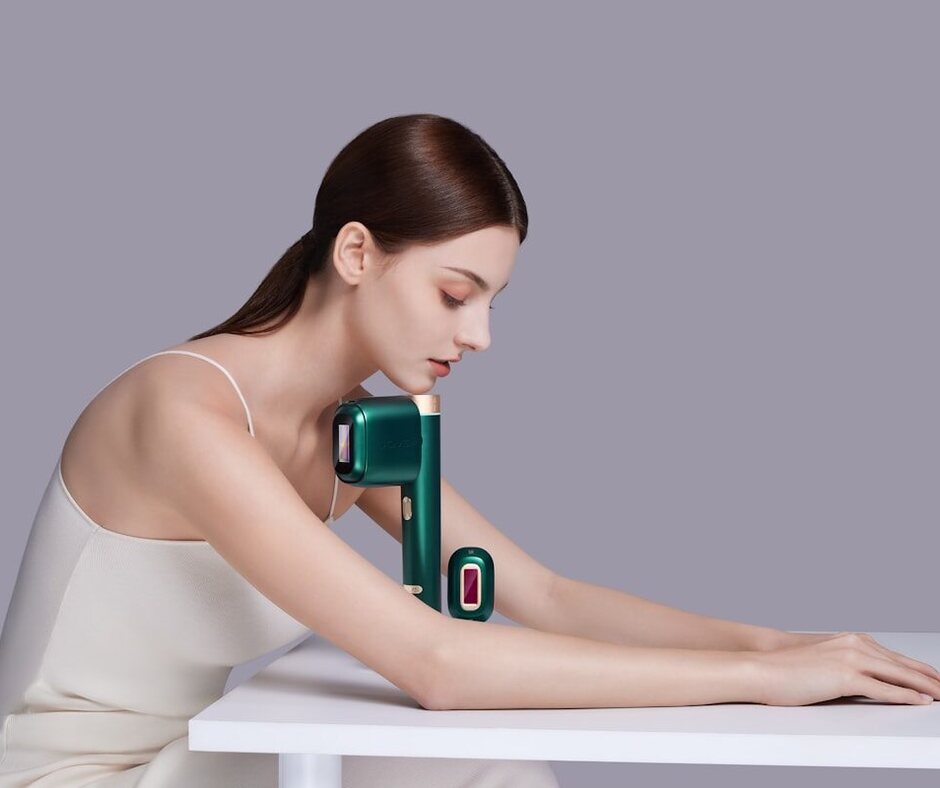
SoftWave Therapy vs. At-Home Devices: What Actually Reaches the Problem?
If you live in Port St. Lucie and deal with nagging pain, chances are you already own at least one recovery gadget. Maybe a TENS unit in a drawer, a massage gun on the nightstand, or a red light panel you ordered online. These tools are popular for good reason. They are convenient, affordable, and they can feel great in the moment. The honest question is not whether they work at all, but how deep they reach and what they are actually doing to the tissue underneath your skin.
At Disc Center of America Port St. Lucie, Dr. John Grassam sees patients every week who have tried the at-home route and still feel stuck. Many are not doing anything wrong. They simply reach a ceiling with surface-level tools and need something built for depth. That is where SoftWave TRT (Tissue Regeneration Technology) comes in. This article compares SoftWave with the three most common at-home devices so you can understand the difference in mechanism, not just marketing.
What At-Home Devices Actually Do
Let us be fair. Each of these tools has a place. The issue is that people often expect them to do a job they were never designed to do.
TENS Units
A TENS (transcutaneous electrical nerve stimulation) unit sends a mild electrical current through pads placed on the skin. That current stimulates the nerves and can interrupt or mask pain signals traveling to the brain. Many people find it soothing, and it can make a rough afternoon more bearable. The key word is mask. A TENS unit is a pain gate, not a repair tool. When you turn it off, the underlying issue is still there because nothing about the tissue itself has changed.
Massage Guns
Percussion massage guns pound the muscle rapidly to loosen tightness, boost short-term circulation, and help you feel less stiff. They are genuinely useful for warming up, cooling down, and easing surface muscle tension. The limitation is depth and target. A massage gun works on muscle bulk and fascia near the surface. It does not reach a stubborn joint, a strained tendon deep in the shoulder, or the tissue around a chronic problem area in any focused, therapeutic way.
Red Light Panels
Red light and near-infrared devices deliver light energy to the skin and shallow tissue. Research on light therapy is interesting, and it may support recovery for some people. But most consumer panels deliver relatively low, scattered energy across a wide area, and light does not penetrate the body the way a mechanical wave can. For deeper structures, the dose reaching the target tissue is often small.
The common thread is simple. TENS masks the signal, massage guns relax the muscle, and red light works mostly at the surface. All three can help you feel better temporarily, but none is designed to drive a deep, structural healing response.
How SoftWave Is Different
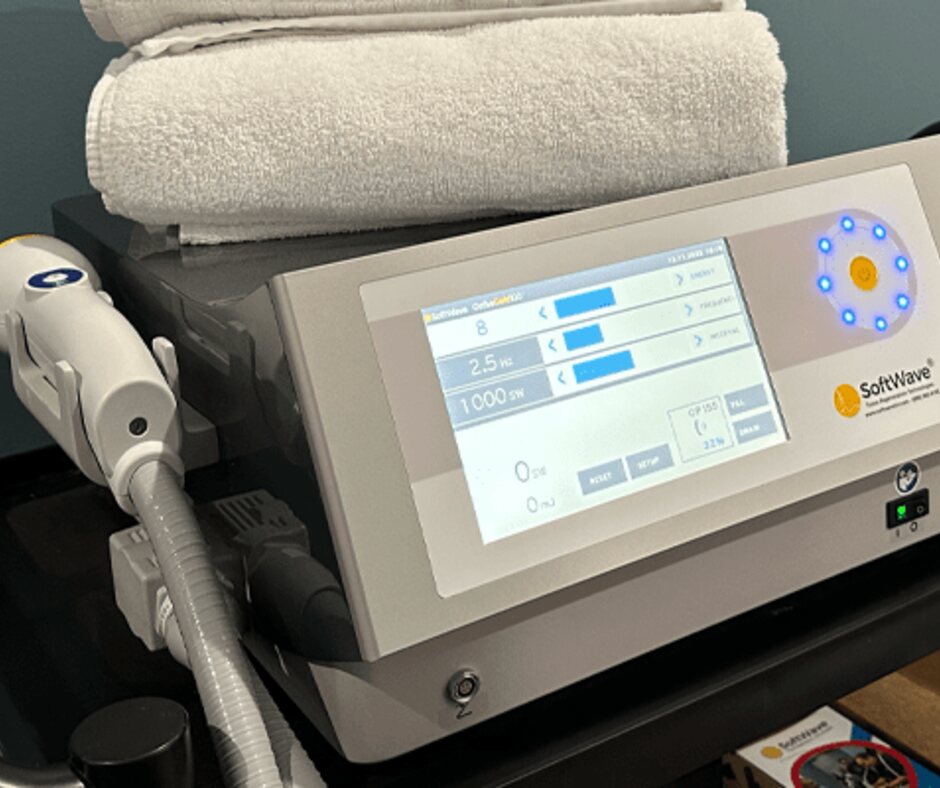
SoftWave TRT is not a stronger version of a home gadget. It is a different category of treatment. SoftWave produces broad-focused acoustic waves generated by a spark inside a patented device. A parabolic reflector shapes those waves so they spread through a wide, deep zone of tissue rather than staying at the surface. It is the only broad-focused shockwave technology, which sets it apart from radial, electromagnetic, and piezoelectric devices.
The goal is not to mask pain or simply relax a muscle for an hour. The goal is to reach the tissue that needs help and prompt the body to start repairing it. That is a fundamentally different intention than anything you plug in at home.
How SoftWave Helps at a Cellular Level
In plain language, the acoustic waves are designed to signal your body to begin its own healing cascade. Here is what that means:
- Stem cell activation: SoftWave is designed to activate and recruit resident stem cells to the treated area so the body has repair crews where it needs them.
- New blood flow: It supports angiogenesis, the formation of new blood vessels, through signals such as VEGF and eNOS, which may improve circulation to tissue that has been starved of it.
- Cell proliferation and collagen: Factors like PCNA and BMP are associated with cell growth and healthy connective tissue rebuilding.
- Calming inflammation: SoftWave is designed to help modulate the inflammatory response rather than just numb it.
- Cellular housekeeping: It is associated with toll-like receptor regulation and the clearance of old, senescent cells that can slow healing.
A massage gun cannot ask your cells to do any of this. Neither can a TENS pad. That is the core distinction: at-home devices manage symptoms, while SoftWave is designed to trigger a regenerative process.
Depth, Precision, and Setting
Two more differences matter. The first is depth and precision. Home tools are broad and shallow by design. SoftWave, delivered by a trained clinician, is aimed at the actual problem area and reaches deep tissue that a surface device cannot touch. The second is setting. In a clinical visit, Dr. Grassam can assess your issue, target the treatment, track your progress, and adjust the plan, so you are not guessing about placement or dose.
A typical SoftWave session is non-invasive and takes only about ten to fifteen minutes. There are no needles, no drugs, no surgery, and no downtime, so most patients return to their day right away. Treatment is usually delivered as a series over roughly six to eight weeks, and because the therapy works by stimulating your own biology, many patients report that improvement continues in the weeks and months after their last session.
If you have leaned on a TENS unit or a massage gun for months and you are tired of the same discomfort returning, it may be time to try something built to reach deeper. To find out whether SoftWave is a fit for your situation, schedule your SoftWave consultation in Port St. Lucie today.
Do You Have to Give Up Your Home Tools?
Not at all. This is not an either-or decision. Many patients keep using a massage gun to loosen up before activity or a TENS unit to take the edge off on a long day, and those tools can complement a clinical plan nicely. The point is to use each tool for what it does best. Home devices are good for comfort and short-term relief. SoftWave is designed for the deeper regenerative work that a gadget cannot perform. A massage gun is like stretching a stiff rope, while SoftWave is aimed at repairing the frayed strands inside it.
What to Expect at the Disc Center
SoftWave has been studied at leading institutions and is used by clinicians who work with professional and collegiate athletes, which speaks to its role as a serious clinical therapy. At Disc Center of America Port St. Lucie, your visit starts with an honest evaluation. Dr. Grassam will review your history, examine the area, and tell you candidly whether SoftWave makes sense for you. SoftWave is not a guaranteed cure, and it does not replace medical advice, but for many people it offers a non-invasive path to address the source of pain rather than just quiet the alarm.
Ready to Take the Next Step?
If the tools in your drawer are managing pain but never resolving it, a therapy built to reach deep and support real healing may be worth exploring. Our Port St. Lucie team is happy to answer your questions and help you decide if SoftWave is right for you.
Request your SoftWave Therapy new patient visit online today
Contact Disc Center of America Port St. Lucie
Disc Center of America Port St. Lucie
555 NW Lake Whitney Place, Ste. 105
Port St. Lucie, FL 34986
Phone: (772) 237-2080
Our Main Office Website: https://portstluciedisccenter.com/
‹ Back
Recent Posts
-
-
-
-

How SoftWave Therapy and Chiropractic Care Work Together
June 11, 2026
-

 555 NW Lake Whitney Place Ste. 105