

Blog
SoftWave Therapy vs. Physical Therapy: Which Do You Need, or Both?
SoftWave Therapy or Physical Therapy in Port St. Lucie: Do You Need One, or Both?
If you have been dealing with a nagging injury, joint pain, or a body that just will not bounce back the way it used to, you have probably heard two names come up: physical therapy and SoftWave Therapy. For many people in Port St. Lucie, the natural question is which one to choose. The good news is that this is not always an either or decision. These two approaches address different parts of the healing puzzle, and in many cases they work best when they support each other.
At Disc Center of America Port St. Lucie, Dr. John Grassam helps patients understand what is actually driving their pain and which tools fit their situation. SoftWave TRT is one of those tools, and it plays a very specific role. Understanding how it differs from traditional physical therapy can help you make a smarter, more confident choice about your own recovery.
What Physical Therapy Is Designed to Do
Physical therapy is built around movement. A physical therapist evaluates how you move, where you are weak, where you are stiff, and how compensations may be feeding your pain. The core focus is on strength, mobility, flexibility, balance, and retraining the body to move correctly again.
Physical therapy usually involves hands-on techniques along with a structured program of exercises and stretches. The goal is to rebuild function so that a joint or muscle can carry load safely and move through its full range without pain. This is especially valuable after surgery, after a significant injury, or when years of poor movement patterns have left certain muscles weak and others overworked.
When strength and coordination are the missing pieces, physical therapy is hard to beat. It teaches the body how to move well again, and much of that progress carries over into daily life through the exercises you continue at home.
Where Physical Therapy Has Limits
Movement retraining is powerful, but it does not always resolve pain that lives deep in the tissue. If an area has poor blood flow, lingering inflammation, or tissue that simply is not repairing itself, exercise alone may only take you so far. Some patients push through their exercises faithfully and still feel stuck. That is often a sign that the problem is not only mechanical. Something at the cellular level may need attention too.
What SoftWave Therapy Focuses On
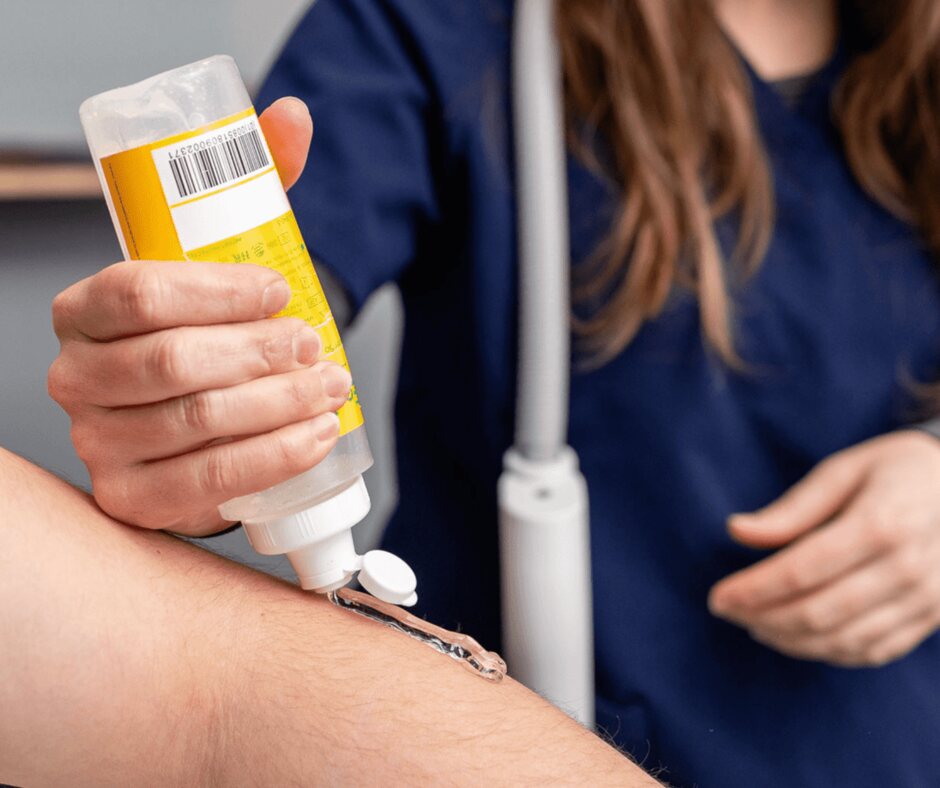
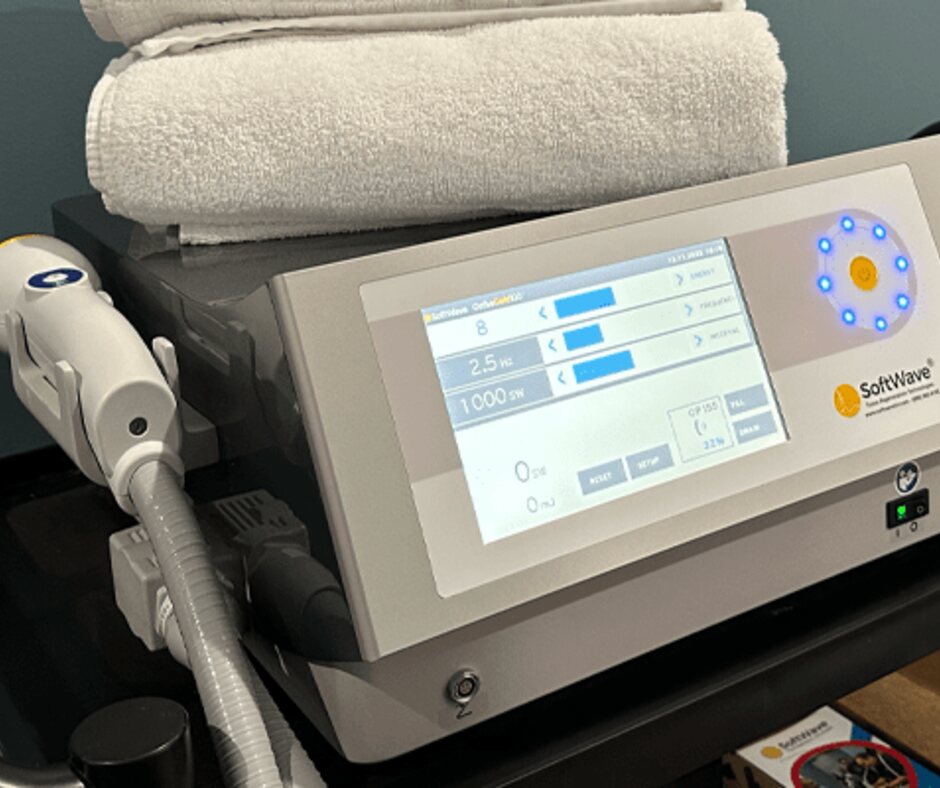
SoftWave Therapy comes at recovery from a completely different angle. Instead of training movement, it works at the tissue and cellular level to stimulate the body's own healing response. SoftWave TRT uses electrohydraulic, spark generated broad focused acoustic waves delivered through a patented parabolic reflector. It is the only broad focused shockwave technology, which sets it apart from radial, electromagnetic, and piezoelectric devices.
These broad focused waves penetrate deep into the body and are designed to trigger a cascade of biological responses. Rather than masking pain, SoftWave aims to jump start the natural repair processes that may have stalled in a stubborn or chronic problem area.
How SoftWave Helps at the Cellular Level
The science behind SoftWave is easier to understand when broken into plain language. Here is what the therapy is designed to encourage:
- Stem cell activation: it may help activate and recruit your body's own resident stem cells to areas that need repair.
- New blood vessel growth: through signals such as VEGF and eNOS, it is designed to support angiogenesis, which means better circulation to the tissue.
- Cell proliferation and collagen: factors like PCNA and BMP are associated with new cell growth and healthy connective tissue.
- Inflammation modulation: it may help calm the inflammatory environment that keeps some injuries from settling down.
- Cellular cleanup: it is thought to support the clearance of worn out, senescent cells so healthier tissue can take over.
In short, physical therapy trains the body to move, while SoftWave works to improve the biological environment in which healing happens. One rebuilds function. The other supports repair.
How the Two Compare Side by Side
Thinking about the two approaches together makes the difference clearer. Physical therapy is active. You participate, you exercise, and you gradually build capacity. SoftWave is non-invasive and passive from your side. There are no needles, no drugs, no surgery, and no downtime. Sessions typically last about ten to fifteen minutes, and a full plan often runs as a series over roughly six to eight weeks. Many patients also notice that healing continues in the weeks and months after their last session, since the body keeps responding to the stimulus.
Physical therapy asks your body to work. SoftWave asks your body to heal. Those are complementary goals, not competing ones.
When Each One Fits Best
SoftWave Therapy may be a strong fit when your pain is tied to poor circulation, chronic soft tissue trouble, or an injury that simply will not resolve on its own. Because it is designed to activate connective tissue, temporarily increase blood flow, and offer temporary relief of minor muscle and joint pain, it often appeals to people who want to avoid medications or surgery and address the root tissue problem.
Physical therapy tends to fit best when weakness, stiffness, or faulty movement patterns are the main issue, or when you are rebuilding after a surgery or major injury and need to safely restore strength and range of motion.
If you are not sure which describes your situation, the smartest move is a professional evaluation rather than a guess. To find out whether SoftWave Therapy, a movement based plan, or a combination makes the most sense for your body, schedule a SoftWave Therapy consultation in Port St. Lucie today and get a clear picture of your options.
Why They Often Work Well Together
Here is where the whole conversation comes full circle. Many patients do not need to choose. When SoftWave helps improve blood flow and supports tissue repair, the area may become more receptive to the strengthening and mobility work that physical therapy provides. In turn, better movement patterns can protect that healing tissue from being reinjured.
Imagine a stubborn joint that hurts every time you try to strengthen it. SoftWave may help address the underlying tissue issue and reduce that minor pain, which can make the exercises more tolerable and more effective. The two approaches can reinforce each other, with SoftWave supporting the biology of healing and physical therapy rebuilding the mechanics of movement.
This is why so many people in Port St. Lucie find that the best question is not SoftWave versus physical therapy. It is how the right combination can move them toward their goals faster and with less frustration. Dr. John Grassam can help you understand where you fall on that spectrum and design a plan that respects both sides of recovery.
Ready to Take the Next Step?
Whether you need SoftWave Therapy, movement focused care, or a thoughtful blend of both, the first step is understanding what your body actually needs. Let our Port St. Lucie team evaluate your situation and help you build a plan that fits.
Request your SoftWave Therapy new patient visit online today
Contact Disc Center of America Port St. Lucie
Disc Center of America Port St. Lucie
555 NW Lake Whitney Place, Ste. 105
Port St. Lucie, FL 34986
Phone: (772) 237-2080
Our Main Office Website: https://portstluciedisccenter.com/
‹ Back
Recent Posts
-

-
-
-
How SoftWave Therapy and Chiropractic Care Work Together
June 11, 2026
-

 555 NW Lake Whitney Place Ste. 105